
Why Your Spine Holds onto Old Emotional Pain: The Fascial Neuroscience and How Pranayama Sets You Free

The spine holds onto suppressed emotions because chronic stress triggers continuous neuromuscular guarding, fascial dehydration, and autonomic nervous system dysregulation along the spinal column, which classical Pranayama releases by rhythmically decompressing the lumbar vertebrae via the diaphragm and stimulating the vagus nerve:
- The Somatic Storage Mechanism: When traumatic or painful experiences are cognitively suppressed, the brain fails to issue an "all-clear" safety signal, trapping the thoracolumbar fascia, psoas major, and deep erector spinae in a state of permanent low-grade muscular armoring.
- The Fascial and Neurological Axis: The sympathetic nervous system's sympathetic chain ganglia run directly along the costovertebral joints of the spine, where cortisol-mediated fascial cross-linking physically crystallizes emotional patterns into chronic postural rigidity.
- The Pranayama Solution: Because the crura of the thoracic diaphragm anchor directly into lumbar vertebrae L1–L3, deep rhythmic breathwork mechanically mobilizes the deep spine from the inside out, upregulating vagal tone and safely releasing stored cellular memory without cognitive re-traumatization.
The Somatic Spine: Why Emotional Pain Migrates into Physical Vertebrae
"Smṛti-pariśuddhau svarūpa-śūnyevārtha-mātra-nirbhāsā nirvitarkā."
— Patanjali Yoga Sutras (1.43)
(When memory is purified of emotional charge, awareness shines forth in its unconditioned, unencumbered state.)
Have you ever noticed how an overwhelming week of psychological stress settles directly into a dull, thumping ache in your lower back? Or how a sudden wave of unspoken grief causes your sternum to cave inward and your shoulder blades to lock like iron armor?
In modern Western society, we are conditioned to treat psychological trauma and emotional distress as phenomena that live strictly "above the neck"—contained entirely within the cerebral cortex. Yet clinical neurobiology, somatic psychology, and ancient yogic science demonstrate the opposite: the mind and the spine exist in a perpetual, bidirectional biological conversation.
When you experience acute fear, unexpressed anger, or sustained emotional exhaustion and force yourself to "push through" without discharging the stress cycle, your physiology does not delete the experience.
Instead, the nervous system physically deposits that unresolved charge into the neuromusculature, nerve plexuses, and connective fascial sheets of your spinal column. Over time, emotional suppression solidifies into chronic spinal stiffness, disc compression, loss of spinal mobility, and unexplained myofascial pain syndromes.
To permanently unlock the spine, cognitive analysis is rarely enough. You must understand the biological mechanisms of somatic storage and deploy the specific breath science—Pranayama—designed to release it at the cellular level.
The 4 Neuro-Somatic Mechanisms of Spinal Emotional Storage
Why does emotional pain settle specifically along the spinal axis rather than in other joints? Both contemporary neuroscience and classical Hatha Yoga reveal four precise anatomical and energetic pathways:
| Somatic Pathway | Anatomical Mechanism & Physiological Action |
|---|---|
| 1. Neuromuscular Bracing | Psoas Major & Paraspinal Flexors: Involuntary contracture locks the spine into defensive bracing during sympathetic fight-or-flight reflexes when no "all-clear" signal arrives. |
| 2. Fascial Myofascial Armoring | Thoracolumbar Fascia & Fibroblasts: Prolonged cortisol exposure triggers excessive collagen cross-linking and dehydration, physically solidifying emotional holding patterns. |
| 3. Sympathetic Ganglia Axis | Sympathetic Chain Ganglia: Nerve trunks running along the costovertebral joints remain hyper-stimulated, restricting micro-circulation and inducing ischemic muscle pain. |
| 4. Pranic Knots (Granthis) | Sushumna Nadi & Subtle Knots: Suppressed psychological impressions (Samskaras) form energetic dams (Brahma, Vishnu, and Rudra Granthis), blocking vital prana. |
1. The Fight-or-Flight Bracing Reflex (The Psoas-Spine Link)
The human nervous system is hardwired with an ancient survival reflex: when danger threatens, the brainstem commands the flexor muscles of the body to contract, curling the torso into a fetal ball to protect vulnerable visceral organs (heart, throat, intestines).
The primary muscle driving this survival reflex is the Psoas Major, which originates directly from the transverse processes of the twelfth thoracic vertebra (T12) and lumbar vertebrae (L1–L5).
When you experience interpersonal conflict, workplace panic, or relational rejection, the brain activates the same motor programs as if you were facing a physical predator. If you swallow the emotion rather than expressing or moving through it, the nervous system never receives the parasympathetic "all-clear" signal. The psoas and deep paraspinal rotators stay locked in a low-grade state of chronic muscular armoring, exerting continuous shear forces on the lumbar vertebrae and sacroiliac joints.
2. Fascial Memory and Connective Tissue Armoring
Wrapping around every muscle fiber, facet joint, and nerve root of your back is a three-dimensional connective web called fascia—specifically the thick, diamond-shaped Thoracolumbar Fascia spanning the lower and mid-spine.
Fascia is not inert biological packing material; it is a living sensory organ densely embedded with mechanoreceptors, nociceptors, and myofibroblasts (contractile cells). Research in fascial biology demonstrates that chronic elevation of circulating cortisol and pro-inflammatory cytokines causes fascial fibroblasts to synthesize excessive cross-linked collagen fibers.
Over months or years of carrying grief, anxiety, or unspoken resentment, this connective tissue dehydrates, loses its slippery hyaluronic acid lubrication, and becomes dense and fibrous. The emotional experience literally crystallizes into the physical architecture of your posture.
3. The Autonomic Axis: Sympathetic Ganglia and the Vagus Nerve
Your spinal column is the literal anatomical chassis of your autonomic nervous system.
Running parallel to the vertebral bodies along the heads of the ribs is the sympathetic trunk (the sympathetic chain ganglia)—the neurological "gas pedal" that accelerates heart rate, diverts blood flow away from digestion, and prepares muscles for battle.
Concurrently, the tenth cranial nerve—the Vagus Nerve—descends from the brainstem through the neck and thorax, innervating the heart, lungs, and gut, serving as the master "brake" that commands relaxation and tissue restoration.
When emotional trauma remains unprocessed, the sympathetic chain ganglia stay chronically stimulated while vagal tone plummets. This autonomic imbalance triggers local ischemia (reduced blood supply) to the spinal muscles, leading to chronic trigger points, nerve sensitivity, and burning muscular fatigue across the upper thoracic spine and neck.
To understand how traditional breathwork restores vagal balance, explore our master guide on The Science of Pranayama & Vagus Nerve Stimulation.
4. The Yogic Subtle Anatomy: Sushumna Nadi, Chakras, and Granthis
In the sacred tradition of classical Hatha Yoga and Tantra, the physical spinal cord is the somatic manifestation of the central energetic channel: Sushumna Nadi.
Running from the root of the pelvic floor (Muladhara) to the crown of the head (Sahasrara), Sushumna Nadi carries the spiritual life force (Kundalini Prana). Where energy becomes obstructed by suppressed psychological impressions, ancient scriptures codify the emergence of Samskaras (subconscious emotional grooves) and Granthis (psycho-energetic knots):
- Brahma Granthi (The Knot of Survival & Material Fear): Located at the base of the spine, locking instinctual fear, financial panic, and existential insecurity into the sacrum and coccyx.
- Vishnu Granthi (The Knot of Attachment & Grief): Located at the heart center (Anahata), locking heartache, unresolved sorrow, and emotional guardrails into the thoracic vertebrae and scapulae.
- Rudra Granthi (The Knot of Egoic Control & Mental Dogma): Located at the eyebrow center (Ajna) and upper cervical spine, locking intellectual rigidity and chronic control into the neck, occiput, and jaw.
When pranic energy cannot oscillate freely through Sushumna, the physical spine becomes stiff, brittle, and defensively guarded.
Master Somato-Emotional Spinal Map
Different emotional themes consistently localize in specific spinal segments based on autonomic nerve pathways and subtle energetic centers:
| Spinal Region | Primary Muscles & Fascia Involved | Autonomic & Nervous Innervation | Somato-Emotional Theme | Classical Chakra & Granthi Center |
|---|---|---|---|---|
| Cervical Spine (C1–C7) | Trapezius, Levator Scapulae, Scalenes, Suboccipital group. | Cervical Plexus, Accessory Nerve (CN XI), Vagus Nerve branches. | Unspoken truths, suppressed voice, hyper-vigilance, intellectual control. | Vishuddha Chakra (Throat) & Rudra Granthi threshold. |
| Upper Thoracic Spine (T1–T6) | Rhomboids, Pectoralis Minor, Serratus Posterior Superior. | Sympathetic Cardiac & Pulmonary Plexuses, Dorsal Scapular Nerve. | Grief, heartbreak, abandonment trauma, emotional withdrawal, chest guarding. | Anahata Chakra (Heart) & Vishnu Granthi. |
| Mid-Thoracic Spine (T7–T12) | Thoracolumbar Fascia, Latissimus Dorsi, Diaphragm crura attachments. | Celiac Plexus, Splanchnic Nerves, Sympathetic Trunk. | Chronic frustration, unexpressed anger, digestive anxiety, lack of personal power. | Manipura Chakra (Solar Plexus). |
| Lumbar Spine (L1–L5) | Psoas Major, Quadratus Lumborum (QL), Erector Spinae. | Lumbar Plexus, Iliohypogastric, Ilioinguinal Nerves. | Financial anxiety, lack of foundational support, burden of survival, sexual guilt. | Svadhisthana Chakra (Sacral). |
| Sacrum & Coccyx | Piriformis, Deep Pelvic Diaphragm, Levator Ani group. | Sacral Plexus, Pudendal Nerve, Pelvic Splanchnic Nerves. | Deep developmental trauma, survival panic, somatic disconnect, rooted fear. | Muladhara Chakra (Root) & Brahma Granthi. |
To understand how pelvic tension directly mirrors lumbar and sacral rigidity, review our clinical guide on The Biomechanics of Mula Bandha: How to Engage the Root Lock Without Pelvic Floor Dysfunction.
Why Talk Therapy Alone Cannot Unwind Spinal Pain (Top-Down vs. Bottom-Up Regulation)
A universal paradox experienced by seekers and chronic pain sufferers is that you cannot talk your way out of trauma that is physically stored in your connective tissue.
Cognitive approaches to emotional healing—such as talk therapy and intellectual psychoanalysis—are known in neuroscience as "Top-Down" processing. They engage the prefrontal cortex to analyze, reframe, and categorize memories:
| Regulatory Approach | Neural Direction & Pathway | Physiological Mechanism & Impact |
|---|---|---|
| Top-Down Regulation (Cognitive / Talk Therapy) | Prefrontal Cortex ➔ Limbic Core ➔ Spinal Musculature | Analyzes and reframes psychological narratives intellectually; however, it cannot directly deactivate involuntary brainstem fight-or-flight motor reflexes. |
| Bottom-Up Regulation (Somatic Pranayama) | Diaphragm & Vagus Nerve ➔ Brainstem ➔ Limbic Emotional Core | Rhythmic diaphragmatic traction mechanically signals safety to visceral afferents, dissolving neuromuscular armoring and resetting autonomic tone at the root. |
Because traumatic holding patterns reside in the autonomic nervous system, brainstem, and myofascia, intellectual understanding rarely alters the involuntary contracture of the psoas or thoracolumbar fascia. You may cognitively understand why you feel anxious, but your lower back remains frozen in a fight-or-flight spasm.
To release physical guarding, you must utilize "Bottom-Up" regulation—therapeutic interventions that alter physiological states directly through the body.
Pranayama (yogic breath science) is the most potent bottom-up modality ever codified because the respiratory system is the only autonomic function that can be consciously controlled at will.
| Parameter | Top-Down Cognitive Therapy | Bottom-Up Somatic Pranayama |
|---|---|---|
| Primary Anatomical Target | Prefrontal Cortex and Neocortex. | Thoracic Diaphragm, Vagus Nerve, Paraspinal Fascia, and Brainstem. |
| Mechanism of Action | Verbal analysis, cognitive reframing, and narrative understanding. | Mechanical fascial mobilization, nitric oxide release, and parasympathetic brake activation. |
| Access to Motor Reflexes | Indirect; cannot voluntarily switch off sympathetic chain firing. | Direct; rhythmically overrides protective muscle guarding via vagal afferents. |
| Risk of Re-Traumatization | Moderate to High; recounting traumatic memories can trigger stress spikes. | Extremely Low; releases somatic tension without requiring cognitive reliving of events. |
| Spinal Decompression | None; intellectual clarity does not decompress spinal facet joints. | High; mechanical diaphragm expansion decompresses lumbar and thoracic vertebrae. |
The Biomechanics of Breath: How Pranayama Unlocks Spinal Fascia
When practiced with anatomical precision, classical Pranayama functions as an internal, hydraulic massage system for the human spine:
1. The Diaphragmatic Lumbar Massage (Crura Mobilization)
The primary muscle of respiration, the Thoracic Diaphragm, does not float disconnected inside the ribcage. It possesses two thick, tendonous muscular legs called the Right and Left Crura:
- The right crus blends into the anterior longitudinal ligament covering lumbar vertebrae L1, L2, and L3.
- The left crus anchors firmly into L1 and L2.
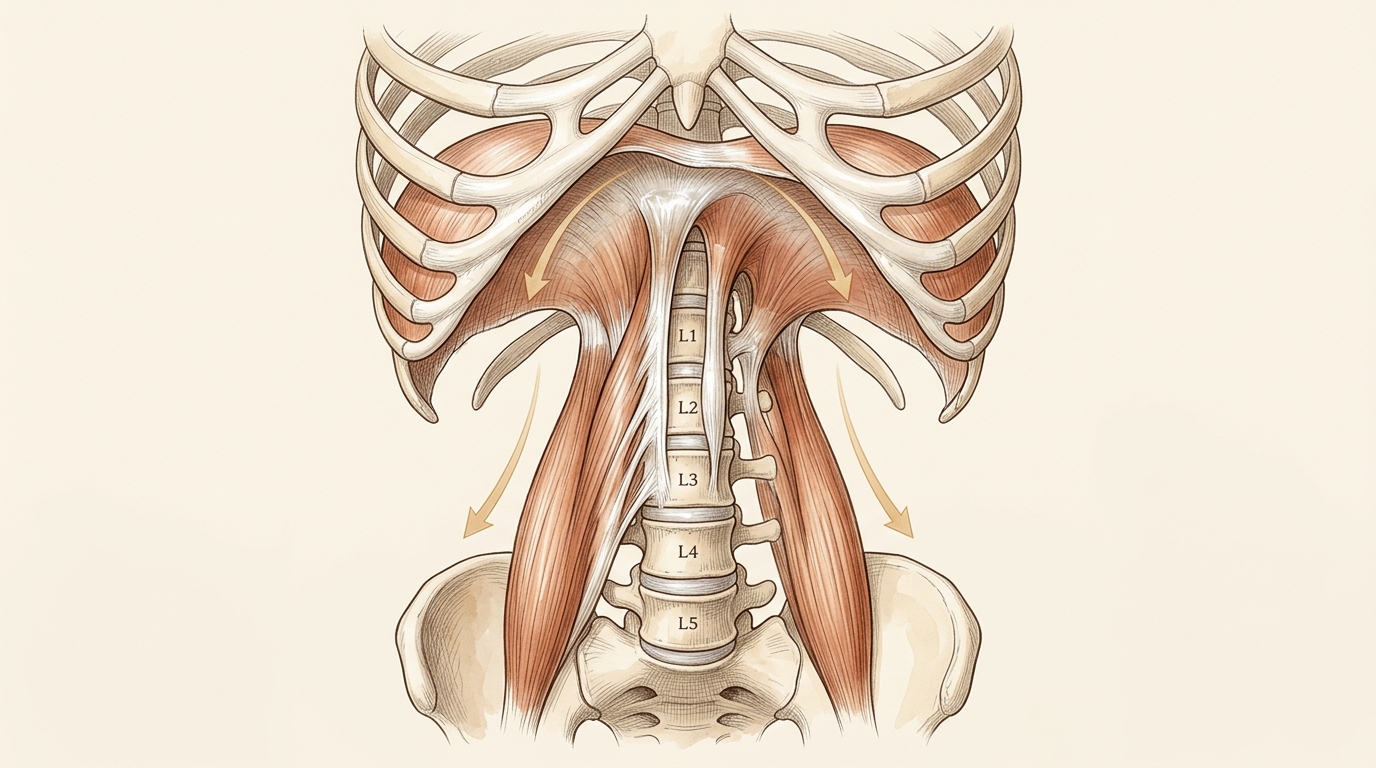
When you breathe with rapid, shallow chest breaths, your diaphragm barely descends. The lumbar vertebrae remain stagnant, starved of circulation, and compressed by the chronically tight psoas muscles flanking them.
When you practice deep, slow Pranayama, the diaphragm descends up to 4 inches into the abdominal cavity on every inhalation. Because of its direct crural attachments, this descent gently pulls the upper lumbar vertebrae forward and downward, tractioning the spine from within. On exhalation, the diaphragm springs upward, allowing the lumbar vertebrae to glide into gentle decompression.
With 15 to 20 deep yogic breaths per minute during sadhana, your lumbar spine receives hundreds of rhythmic, healing micro-mobilizations.
2. Switching Off the Sympathetic Guarding Reflex
As you extend the duration of your exhalations (such as a 1:2 inhalation-to-exhalation ratio), pulmonary stretch receptors stimulate the afferent fibers of the Vagus Nerve.
These sensory signals travel straight up through the jugular foramen into the Nucleus Ambiguus in the brainstem. The brainstem immediately dispatches an inhibitory command through the parasympathetic nervous system, dialing down the firing rate of the sympathetic chain ganglia along the spine.
Within minutes, the involuntary "clench" of the deep erector spinae, multifidus, and quadratus lumborum muscles begins to soften, releasing chronic spinal tension without physical manipulation.
3. Hydraulic Fascial Hydration in the Thoracic Spine
The ribcage forms twelve bilateral joints with the thoracic spine (the costovertebral and costotransverse joints). Chronic grief and anxiety freeze these joints, turning the ribcage into an unyielding cage.
Pranayama expands the ribcage three-dimensionally: laterally (bucket-handle motion), anterior-posteriorly (pump-handle motion), and vertically. This rhythmic expansion generates shear forces across the surrounding fascial sheaths, driving fluid and hyaluronic acid back into dehydrated, stiffened connective tissues. The thoracic spine regains its natural rotational and extension capacity.
The 3 Best Pranayama Techniques for Somato-Spinal Release
If your back feels rigid, emotionally burdened, or locked in defensive tension, apply these three classical practices in sequence. Sit upright on a firm meditation cushion or block with your pelvis slightly elevated to ensure neutral lumbar lordosis:
| Sequence Stage | Pranayama Technique | Primary Anatomical Target | Somatic Release Action |
|---|---|---|---|
| Step 1 | Dirga Pranayama (Three-Part Breath) | Lumbar Spine & Psoas Major | Full 4-inch diaphragmatic descent rhythmically tractions L1–L3 crural tendons, unsticking lower back tension. |
| Step 2 | Nadi Shodhana (Alternate Nostril) | Spinal Cord & Autonomic Axis | Regulates the ultradian nasal cycle, harmonizing cerebral hemispheres and turning off sympathetic chain firing. |
| Step 3 | Bhramari Pranayama (Humming Bee) | Thoracic Spine, Scapulae & Neck | 120–130 Hz acoustic resonance stimulates vagal laryngeal terminals and releases 15x nitric oxide to melt stubborn chest armor. |
1. Dirga Pranayama (The Three-Part Yogic Breath)
- Primary Somatic Target: Lower back tension, psoas contracture, and sacral survival panic.
- How to Practice:
- Sit tall with a long, unforced spine. Place your left hand on your lower abdomen and your right hand over your lower ribs.
- Inhale slowly through your nose for a count of 4: fill the lower belly first (expanding your left hand), then widen the lateral ribcage (expanding your right hand), and finally allow the collarbones and upper chest to float upward.
- Exhale smoothly in reverse order over a count of 6 or 8: let the upper chest sink, the ribs draw inward, and the lower belly soften back toward the spine.
- Practice for 7 to 10 minutes continuously.
- Why It Releases the Spine: By demanding full excursion of the diaphragm, Dirga Pranayama rhythmically tractions the lumbar attachments (L1–L3 crura), mobilizing frozen connective tissue in the lower back and signaling deep physiological safety to the primitive brain.
2. Nadi Shodhana (Alternate Nostril Breathing)
- Primary Somatic Target: Mental agitation, emotional overwhelm, and erratic nervous system firing along the spinal cord.
- How to Practice:
- Adopt Vishnu Mudra with your right hand (folding the index and middle fingers toward the palm).
- Gently close your right nostril with your thumb. Inhale smoothly through your left nostril for 4 counts, visualizing cool lunar energy (Ida Nadi) ascending the left side of your spine.
- Close both nostrils gently with your thumb and ring finger for 2 counts (Antara Kumbhaka).
- Release the thumb, exhaling slowly through the right nostril for 6 to 8 counts, visualizing warm solar energy (Pingala Nadi) descending the right side of your spine.
- Inhale through the right for 4, pause for 2, and exhale through the left for 6 to 8. This constitutes one full cycle. Practice for 12 to 15 cycles.
- Why It Releases the Spine: Nadi Shodhana regulates the ultradian nasal cycle and balances bilateral prefrontal brainwave activity, deactivating sympathetic arousal along the spinal cord. For clinical EEG data on this practice, explore our detailed investigative guide on The Neurobiology of Nadi Shodhana: How Alternate Nostril Breathing Balances Brain Hemispheres.
3. Bhramari Pranayama (The Humming Bee Breath)
- Primary Somatic Target: Unexpressed grief, emotional armor across the heart/scapulae, and cervical neck rigidity.
- How to Practice:
- Sit in neutral alignment. Bring your thumbs to gently close the tragus of each ear, lightly resting your remaining fingers over your eyes and cheeks (Shanmukhi Mudra or simplified ear closure).
- Inhale deeply through your nose into the center of your chest.
- Keep your lips lightly sealed with teeth slightly parted. As you exhale smoothly, generate a steady, low-pitched, resonant humming tone (Mmmmmm), resembling the drone of a bumblebee.
- Focus your internal awareness on the physical acoustic vibration vibrating through your palate, throat, cervical spine, and thoracic vertebrae.
- Repeat for 10 to 12 long, uninterrupted breaths.
- Why It Releases the Spine: The physical frequency of Bhramari (typically 120–130 Hz) stimulates the vagus nerve directly in the larynx and boosts endogenous nasal nitric oxide production by up to 15-fold. This powerful vasodilator relaxes smooth muscle tissue throughout the vascular tree, releasing chronic, stubborn fascial grip across the upper thoracic spine and neck.
Comparative Practice Matrix: The 3 Spinal Pranayamas
| Practice Name | Primary Mechanical & Fascial Action | Neuro-Vagal Target | Best Time to Practice | Optimal Dosage |
|---|---|---|---|---|
| Dirga Pranayama (Three-Part Breath) | Full diaphragmatic excursion; rhythmic traction of lumbar crural tendons (L1–L3). | Downregulates sympathetic lumbar chain; stimulates lower vagal terminals. | Morning sadhana or immediately after physical asana. | 7 to 10 minutes daily. |
| Nadi Shodhana (Alternate Nostril) | Decongests spinal energy channels (Ida & Pingala Nadis); balances autonomic firing. | Frontal lobe alpha wave synchrony (8–12 Hz); balances parasympathetic tone. | Midday stress resets, dusk, or before seated meditation. | 10 to 15 rounds (8–10 mins). |
| Bhramari Pranayama (Humming Bee) | Acoustic micro-vibration of thoracic cage and cervical vertebrae; fascial fluid shearing. | Direct vagal laryngeal branch stimulation; 15x nitric oxide release. | Evening before sleep or during episodes of acute grief / anxiety. | 10 to 12 long humming breaths. |
Somatic Release Phenomena: Why You Feel Like Crying or Shivering During Spinal Work
When practitioners begin working with these breath techniques, they frequently experience unexpected physiological phenomena:
- Spontaneous waves of weeping without an identifiable narrative thought.
- Involuntary micro-tremors, twitching, or shivering along the spine (neurogenic tremors).
- Sudden rushes of warmth or tingling ascending the back.
- Deep, spontaneous sighs followed by profound physical fatigue and peaceful stillness.
These are not signs of emotional regression; they are biological proof of somatic discharge.
As documented by somatic trauma pioneer Dr. Peter Levine (creator of Somatic Experiencing), all wild animals involuntarily shiver and shake after surviving a predator attack. This neurogenic shaking is the mammalian nervous system's biological mechanism for discharging excess sympathetic energy and returning to homeostasis.
Because humans possess rational neocortices, we habitually suppress these involuntary discharges out of embarrassment or fear. When Pranayama softens the fascial grip on your spine, the nervous system finally feels safe enough to complete the thwarted defensive responses of the past.
If tears or shaking arise during your practice, do not analyze them. Maintain slow, unforced nasal breathing, soften your jaw, and allow the spinal tissues to discharge their ancient cargo into the earth.
Classical Scriptural Grounding: Prana and the Spine in Hatha Yoga
In the Hatha Yoga Pradipika (Chapter 2, Verse 2), Sage Svatmarama describes the inseparable union of spinal movement, breath, and mental agitation:
"Chale vāte chalaṁ chittaṁ niśchale niśchalaṁ bhavet,
yogī sthāṇutvam āpnoti tato vāyuṁ nirodhayet." (HYP 2.2)
(When the breath wanders and is irregular, the mind is unsteady. But when the breath is stilled, the mind becomes motionless, and the yogi attains spinal stability. Therefore, one must master breath control.)
Notice that Svatmarama uses the word Sthanutvam—which literally translates to "attaining the stability and stillness of a firm pillar or tree trunk."
In authentic yoga, a stable spine is not an aggressively rigid spine held by clenched muscles. It is a spine characterized by Sthira (steadiness) and Sukha (ease and spaciousness). True spinal freedom arises only when the breath clears the psychic detritus from the spinal nadis, transforming the vertebral column from a storehouse of past pain into a luminous channel for living presence.
To discover how classical dynamic asana sequences prepare the spine for pranayama, review our Traditional Mysore Style Ashtanga Yoga Sequence Guide.
Frequently Asked Questions (FAQ)
1. Can emotional trauma really get stuck in your physical back and spine?
Yes. While the cognitive memory of an event is processed in the brain's hippocampus and cortex, the physiological stress response (the release of adrenaline and cortisol, elevated muscle tone, and protective flexing) is executed by the autonomic nervous system and muscular tissue. When stress is unresolved or chronically suppressed, the motor neurons along the spine and psoas remain in a permanent state of low-grade guarding, leading to chronic myofascial trigger points, reduced disc hydration, and pain.
2. Why do I frequently feel like crying during deep breathing or spinal stretches?
Releasing chronic fascial tension in the spine, hips, or chest physically alters autonomic feedback to the limbic system. When tight muscles and dehydrated fascia soften under the influence of slow diaphragmatic breathing, the nervous system finally lets go of the stored emotion (such as sorrow or fear) that originally motivated the muscular contracture. This emotional catharsis is a completely natural, healthy milestone of somatic nervous system regulation.
3. How long does it take for Pranayama to relieve chronic back tension?
You will experience an immediate drop in nervous system tension and muscular tone after just 5 to 10 minutes of slow, extended-exhalation breathing (such as Dirga or Bhramari Pranayama). However, for deeply ingrained postural holding patterns and long-standing fascial armoring, practicing consistently for 15 to 20 minutes daily over 4 to 8 weeks is required to remodel connective tissue and re-establish neural baselines.
4. Should I practice Pranayama if I currently have an acute herniated disc or severe sciatica?
Yes, but exclusively in a supported, non-stressful position. If you have an acute spinal injury, avoid unsupported sitting on the floor. Instead, lie supine on your back with your calves resting comfortably on a chair (90-90 restorative position) with a small pillow supporting your cervical curve. Practice gentle Dirga Pranayama and Bhramari without any breath retention (Kumbhaka). The diaphragmatic mobilization and parasympathetic signaling will accelerate tissue healing without loading the spinal discs.
Experience Somatic Science & Classical Breathwork at Samyut Yogashala Mysore
At our residential Samyut Yogashala shala in Mysore, India, yoga is taught as an integrative science of human liberation. Under authentic lineage teachers, you will immerse yourself in functional biomechanics, classical pranayama, somatic release, and living philosophy.
Whether you are preparing to teach globally or seeking to resolve chronic somatic holding patterns and discover the transformative depth of your own spine, true healing begins when you replace force with conscious biological intelligence.
Explore our upcoming residential cohorts for the 200-Hour Ashtanga Yoga Teacher Training in Mysore, learn how to evaluate authentic schools in How to Choose a Yoga School in India: Red Flags vs. Authentic Lineage, examine our transparent pricing in The Truth About Yoga Teacher Training in India Costs, or connect with our international seeker community through the Samyut Sangha Community.
Yogacharya Aravind Prasad
E-RYT 500 · YACEP · Founder, Samyut Yoga
Gurukulam-trained in Yoga, Veda and Vedanta with 15+ years of teaching experience. Founder of Samyut Yoga, Mysore.
Join Samyutam — The Spiritual Sadhana Sangha
Move beyond posture. Study Vedanta philosophy, master Sanskrit, and practice traditional pranayama and Tantric meditation under authentic lineage guidance.
Apply to Join the SanghaRelated Articles & Insights
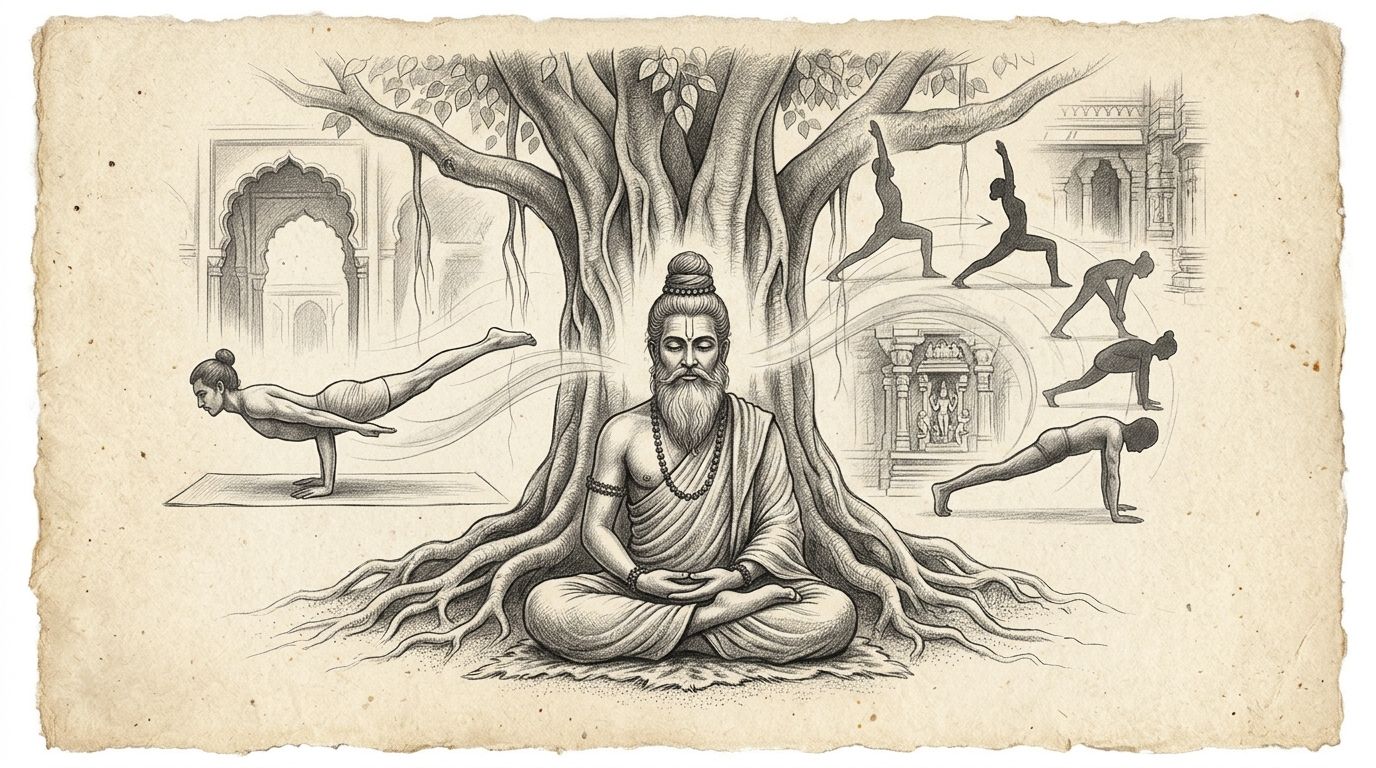 Yoga Philosophy & History
The Origins and Evolution of Yoga Asanas: From Ancient Meditation Seats to Modern Biomechanics
Explore the complete history and origins of yoga asanas. Discover how physical postures evolved from ancient seated meditation postures into medieval Hatha alchemical poses and modern dynamic Mysore Vinyasa systems.
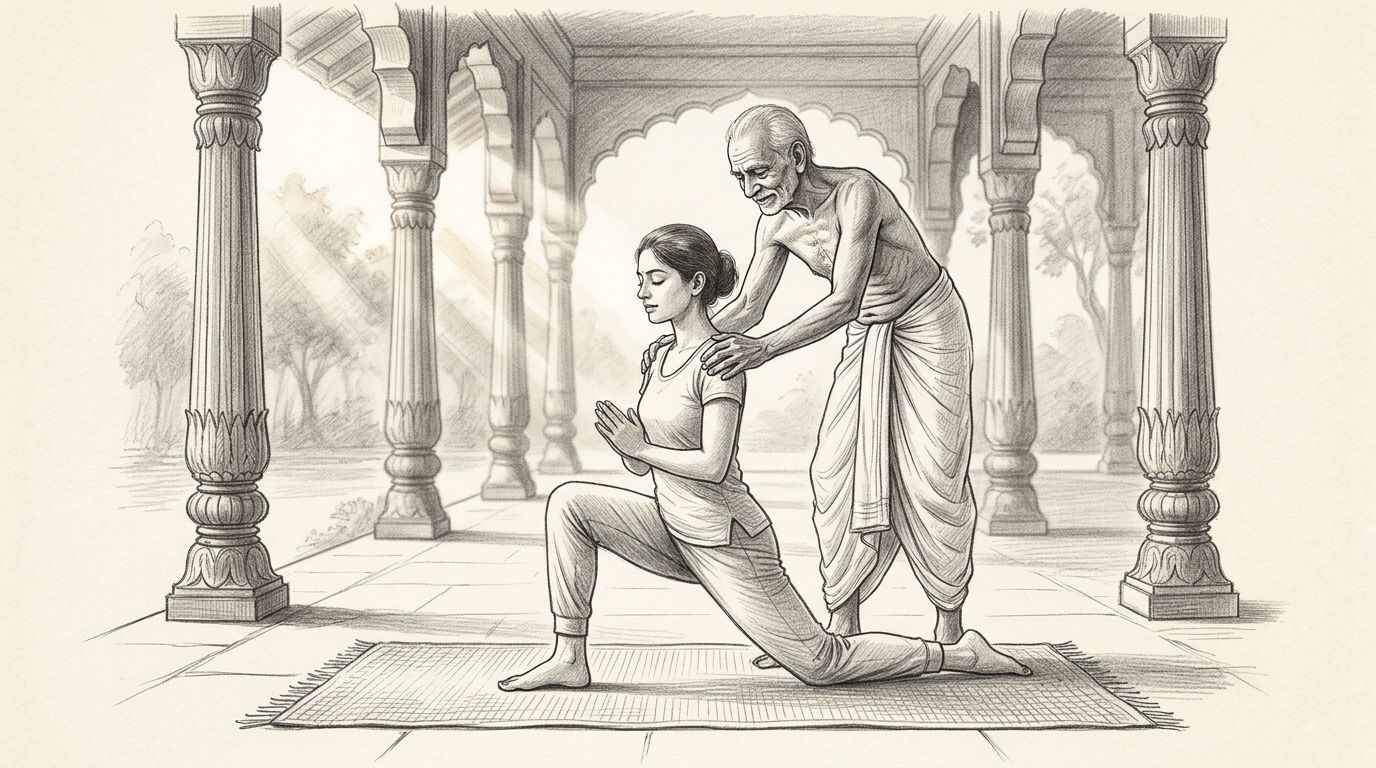 Yoga Pedagogy
Why Learn Yoga from an Indian Teacher: 9 Logical & Emotional Reasons for True Authenticity
Explore 9 compelling reasons why learning yoga from an Indian lineage teacher in India provides an authenticity, cultural depth, and nervous system transformation that commercial certifications abroad cannot replicate.
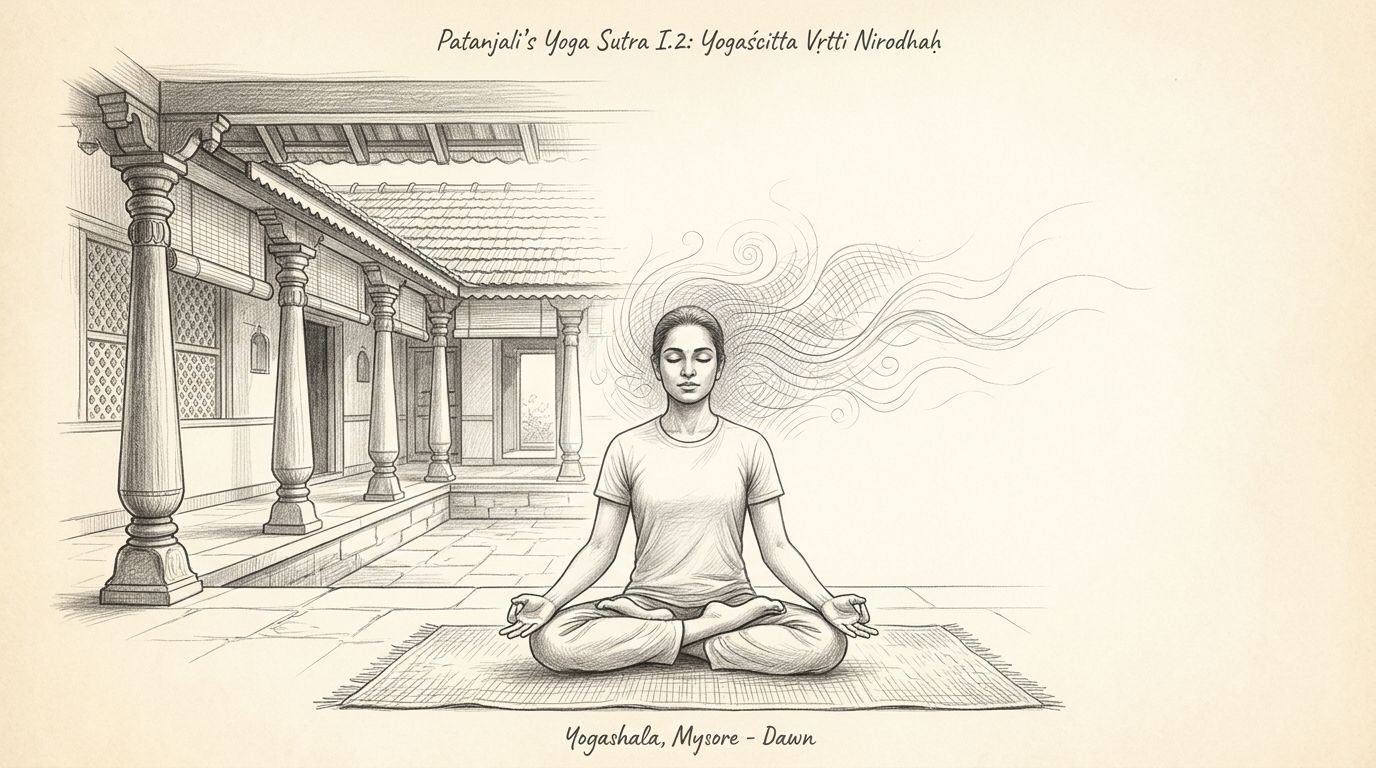 Yoga Psychology
The Secrets of Overthinking and How to Stop Overthinking Through Yogic Understanding
Discover how classical yoga psychology explains overthinking as Chitta Vritti. Unmask the 10 respectable disguises, use the one decisive filter, and apply the 6-step protocol to quiet mental noise.