Why Learn Yoga from an Indian Teacher: 9 Logical & Emotional Reasons for True Authenticity

Why is Learning Yoga from an Indian Teacher More Authentic Than Studying Abroad?
Learning yoga from an authentic Indian teacher provides an ontological depth of transmission that commercial certifications abroad cannot match, grounded in nine decisive cultural, philosophical, and pedagogical factors:
- Cultural Osmosis (Achara): Indian masters live yoga from early childhood as an unbroken daily rhythm rather than an adult career transition or fitness hobby.
- Linguistic & Sanskrit Depth: Sacred concepts like Chitta, Prana, and Samskara carry vibrational and psychological precision lost in Western translations.
- Unbroken Lineage (Parampara): Direct teacher-disciple transmission protects practice from commercial dilution and aesthetic fitness trends.
- Integrated Science: Asana is intrinsically unified with Ayurveda, natural circadian rhythms (dinacharya), and classical yogic psychology.
- Non-Commercial Devotion (Seva): Teaching is approached as a sacred spiritual duty rather than fitness marketing, keeping ego out of the shala.
The Search for True Roots: Beyond the Commercial Yoga Bubble
Every year, sincere practitioners across Europe, North America, and Australia reach a defining crossroads in their personal practice.
You have spent years rolling out your mat in sleek studios across London, Berlin, Paris, or New York. You move smoothly through vinyasa sequences and hold solid postures, yet beneath the curated playlists and athletic pacing, an unmistakable emptiness persists. You sense that modern studio culture has reduced a five-thousand-year-old spiritual science into fitness gymnastics and aesthetic acrobatics.
When you decide to deepen your practice through teacher training, marketing algorithms flood your feed with luxury retreats in Bali, Costa Rica, Thailand, or southern Europe. They promise certification in twenty days beside resort swimming pools and acai bowl cafes.
And then there is India.
For sincere seekers, an essential question inevitably emerges: when evaluating learning yoga in india vs abroad, why learn yoga in india directly under an Indian lineage teacher rather than with a foreign instructor in a holiday resort? Does cultural heritage and lineage genuinely matter, or is yoga simply a universal physical technique that anyone can teach equally well?
This is neither a matter of cultural prejudice nor spiritual romanticism; it is a question of somatic authenticity, lineage integrity, and philosophical depth. Discover the nine practical, emotionally compelling, and logically sound reasons why India remains the best country to learn yoga.
Reason 1: Yoga as "Achara" — The Power of Cultural Osmosis
In the West and resort hubs like Bali, yoga is almost universally acquired as an adult lifestyle choice. A practitioner discovers yoga in their twenties or thirties to treat corporate burnout, ease chronic back pain, or build physical flexibility. They complete a modular 200-hour training course and immediately begin instructing others.
In India, authentic yoga is not a career choice; it is Achara—a lived cultural reality absorbed through osmosis from early childhood.
An authentic Indian master grew up in a household where breath awareness was woven into daily life, the morning began with solar cleansing rituals, and food was prepared according to Ayurvedic principles of Sattva, Rajas, and Tamas. Ethical restraints (Yamas) and internal observances (Niyamas) were not studied from a textbook; they were modeled daily by grandparents and elders.
When an Indian teacher cues you to ground your energy, soften your belly, or stabilize your breath, they are not reciting memorized lines from a training manual. They are speaking from decades of cellular conditioning. You cannot manufacture forty years of cultural osmosis in a four-week crash course. This deep cultural grounding is why seekers looking for an authentic yoga teacher training india choose to study directly with Indian masters.
Reason 2: Sanskrit Precision and the Vibrational Soul of Sutras
Language shapes human consciousness and determines how we interpret inner experience. English is engineered for commercial transactions, scientific categorization, and external description; Sanskrit is a sacred vibrational language engineered specifically for metaphysical cartography and psychological precision.
When non-native instructors teach philosophy, subtle terms are inevitably flattened and distorted:
- Chitta is reduced to "mind," obscuring its role as the subconscious storehouse of memory-seeds.
- Prana is mistranslated as simple "breath," missing its nature as cosmic life-force.
- Vairagya is mistaken for emotional apathy or detachment, rather than sovereign freedom from outcome-addiction.
- Asana is treated purely as an acrobatic physical "pose."
An authentic Indian master understands Sanskrit phonetics, roots, and etymology. They know Asana derives from As (to sit, to be present, to establish oneself in stillness), and Dhyana is the unbroken flow of awareness toward reality. When an Indian teacher chants mantras, the acoustic vibration calms the nervous system directly. Hearing Sanskrit pronounced with lineage cadence opens intuitive dimensions that dry intellectual translations can never reach.
Reason 3: Unbroken Lineage (Parampara) vs. the Fitness Reseller Model
In the commercial wellness economy, yoga has been privatized and commodified. Studios invent hybrid trademarks—power sculpt, acro-fusion, or beer yoga—re-engineering ancient sequences to maximize calories and appeal to social media algorithms.
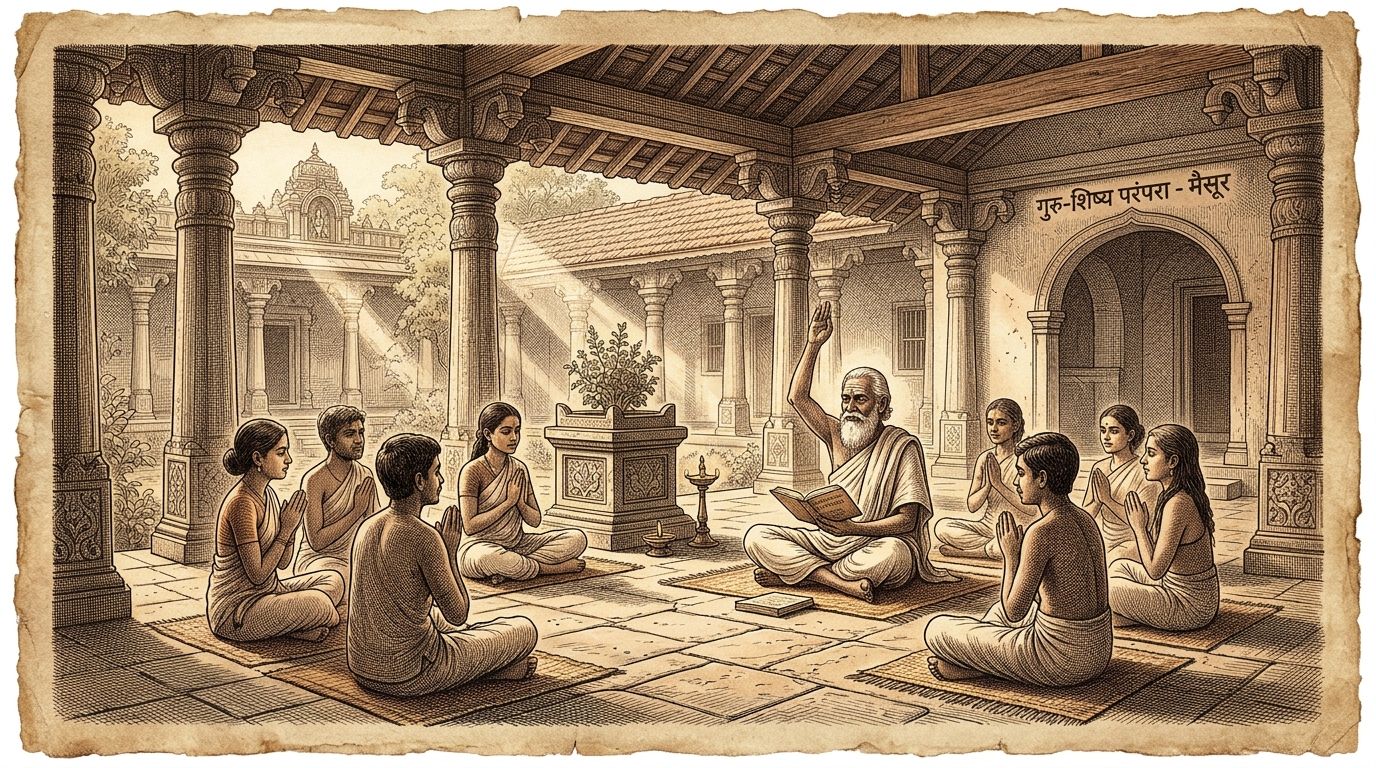
In contrast, authentic Indian teaching rests entirely upon Guru-Shishya Parampara—the sacred, unbroken chain of teacher-disciple transmission stretching across centuries.
An authentic Indian teacher views themselves not as an "inventor" or "fitness guru," but as a humble transmitter of a timeless stream of wisdom. They teach adjustments, postures, and breath ratios exactly as their master taught them, who learned from their master before them.
This lineage integrity provides profound safety:
- Postures are not forced into extreme aesthetic contortions for social media photos.
- Physical adjustments are grounded in generational biomechanical observation of thousands of bodies over centuries.
- The practice is protected from commercial dilution and trendy distortions.
When you study in India, you are not buying a commercial lifestyle brand; you are connecting with an unbroken electrical current of human awakening. To identify genuine schools, review our guide on How to Choose a Yoga School in India: Red Flags vs. Authentic Lineage.
Reason 4: Integrated Science (Ayurveda, Dinacharya & Subtle Prana)
Outside India, yoga is frequently divorced from its sister sciences. Students practice intense hot vinyasa in freezing weather, consume cold smoothies, and wonder why their digestive fire (Agni) and nervous systems suffer.
In authentic Indian pedagogy, yoga is one branch of a holistic Vedic lifestyle:
- Asana aligns with natural circadian rhythms (Dinacharya).
- Pranayama is calibrated according to your Ayurvedic dosha (Vata, Pitta, Kapha).
- Diet, digestion, and seasonal transitions (Ritucharya) are respected as sacred foundations of practice.
An Indian teacher intuitively spots when a student's nervous system is overheated by excess Pitta or depleted by Vata, prescribing cooling alignment and grounding pranayama rather than ego-driven strain. This holistic wisdom makes learning yoga in india vs abroad a fundamentally different health journey.
Reason 5: Teaching as Seva (Sacred Devotion) over Commercial Hustle
In Western wellness culture, instructors face intense financial pressure to be fitness models and digital marketers. Classes are often crafted to entertain, flatter student egos, and earn five-star online reviews.
In traditional Indian culture, teaching yoga is regarded as Seva—a sacred spiritual duty and selfless offering.
This completely shifts the classroom dynamic:
- An Indian lineage teacher does not teach to flatter your ego or validate physical vanity.
- They will not praise you for forcing a pose if your breath is strained and your eyes are tense.
- They possess the spiritual authority to tell you to step off the mat, sit down, and breathe.
This absence of commercial pandering provides genuine psychological safety. You are no longer performing for validation. You are in a sacred space where your soul is seen, your limitations are met with compassionate firmness, and your ego is gently dismantled.
Reason 6: Beyond the Mirror — Eradicating the Western Performance Trap
Step into almost any yoga studio across Europe, North America, or Bali, and you will find wall-to-wall mirrors. Mirrors reinforce external judgment, encouraging practitioners to obsess over appearance, body angles, and aesthetic perfection.
Traditional Indian shalas contain zero mirrors.
An authentic Indian master turns your attention 180 degrees inward:
- You feel how a posture resonates internally rather than checking how it looks in glass.
- You cultivate Drishti (focused gaze stabilization), drawing senses inward (Pratyahara).
- Alignment is mastered through somatic proprioception and energetic locks (Bandhas).
This liberates practitioners from body dysmorphia and competitive comparison. Yoga ceases to be a performance; it becomes an inner sanctuary. Experience this inward focus in our breakdown of the Ashtanga Yoga Tristhana Method.
Reason 7: Ethics as Living DNA, Not a Theoretical Lecture
In many international certifications, Patañjali’s Yamas (ethical restraints) and Niyamas (internal observances) are treated as an abstract two-hour lecture on a Friday afternoon.
In India, ethics are the living bedrock upon which all physical practice rests:
- Santosha (contentment) is visible in the teacher's modest, grounded lifestyle.
- Ahimsa (non-harm) guides physical adjustments without risking ligament tears.
- Tapas (disciplined heat) is modeled by dawn sadhana at 4:30 AM every single morning.
- Ishvara Pranidhana (surrender) is reflected in profound humility and reverence.
When ethics are lived rather than theorized, you understand why learn yoga in india: inner peace is cultivated through harmonious living, not through flexible hamstrings. Read our masterclass on How Vedanta Philosophy Complements Physical Yoga Practice.
Reason 8: The Spiritual Geography and Energetic Soil of India
While spiritual liberation is internal, human nervous systems respond powerfully to environmental ecology and collective intention.
A resort bubble in Bali or Europe cannot replicate the sacred energetic geography of India:
- In Mysore, thousands of sincere seekers gather before dawn in silent dedication. The entire city vibrates with the resonance of chanting, temple bells, and rhythmic breath.
- You walk past historic stone shalas where legendary masters taught for generations.
- Society honors your practice rather than viewing it as an eccentric fitness trend.
In Mysore, you are carried by the collective momentum of thousands of years of continuous practice. Environmental resistance dissolves. Discover why Mysore remains the heart of global practice in Why is Mysore Considered the Global Capital of Ashtanga Yoga and our Mysore Yoga Capital Guide.
Reason 9: The Ultimate Shift — From Technique to Self-Transformation
A foreign instructor almost always approaches yoga through the lens of technique: sequencing classes, modifying postures, and memorizing anatomical cues.
An authentic Indian master approaches yoga through the lens of transformation: who are you beyond the physical body?
They do not view you as a customer purchasing credentials; they see you as a Sadhaka—a seeker ready to transcend self-limiting illusions (Maya):
- Physical tension reveals where emotional grief and fear are hoarded.
- Jagged breathing exposes subconscious survival patterns.
- Asana becomes a vehicle to transcend physical identity and rest in the silent Witness (Sakshi).
You do not leave India with a piece of paper; you return home with a transformed nervous system, an integrated mind, and deep self-knowledge. Review the real personal growth journey in The True Cost of a Yoga Teacher Training in India.
Comparison: Yoga Teacher Training in India vs Bali & Abroad
When deciding between yoga teacher training in india vs bali, Europe, or Costa Rica, here is how the experiences compare:
Choosing the Source Over the Echo
If your goal is a wellness vacation with poolside leisure and basic stretches, a commercial resort in Bali or Europe will fulfill that wish.
However, if you feel an authentic call—if you want to study the science of human consciousness, master your nervous system through classical pranayama, and connect with an unbroken lineage—there is only one destination.
Do not settle for a diluted echo when the pure source is waiting for you.
When choosing authentic yoga teacher training india offers, you do not simply learn how to teach postures. You discover why learn yoga in india is the definitive choice for lifelong transformation.
Experiencing the Living Science at Samyut Yogashala Mysore
At our residential Samyut Yogashala shala in Mysore, India, yoga is taught as an integrative science of human liberation. Under authentic lineage teachers, you will immerse yourself in functional biomechanics, classical pranayama, somatic release, and living philosophy.
Whether you are stepping onto the mat for the first time or preparing to teach globally, explore our comprehensive selection guide on Mysore: The World Capital of Yoga — A Complete Guide, compare styles in Ashtanga vs. Vinyasa vs. Hatha: Which YTT Should I Choose, and read essential logistics in our Solo Female Traveler’s Guide to Yoga Teacher Training in India.
Begin your personal journey from technique into self-mastery through our residential 200-Hour Ashtanga Yoga Teacher Training in Mysore and Classical Hatha Yoga Teacher Training, or connect with our international seeker family through the Samyut Sangha Community.
Yogacharya Aravind Prasad
E-RYT 500 · YACEP · Founder, Samyut Yoga
Gurukulam-trained in Yoga, Veda and Vedanta with 15+ years of teaching experience. Founder of Samyut Yoga, Mysore.
Join Samyutam — The Spiritual Sadhana Sangha
Move beyond posture. Study Vedanta philosophy, master Sanskrit, and practice traditional pranayama and Tantric meditation under authentic lineage guidance.
Apply to Join the SanghaRelated Articles & Insights
 Yoga Pedagogy
How to Choose a Yoga School in India: 7 Red Flags of "Certificate Mills" vs. Authentic Lineage
An essential guide for prospective international students on evaluating yoga teacher training in India, exposing 7 critical red flags of commercial certificate mills and outlining the gold standards of authentic Gurukulam lineage.
 Yoga Pedagogy
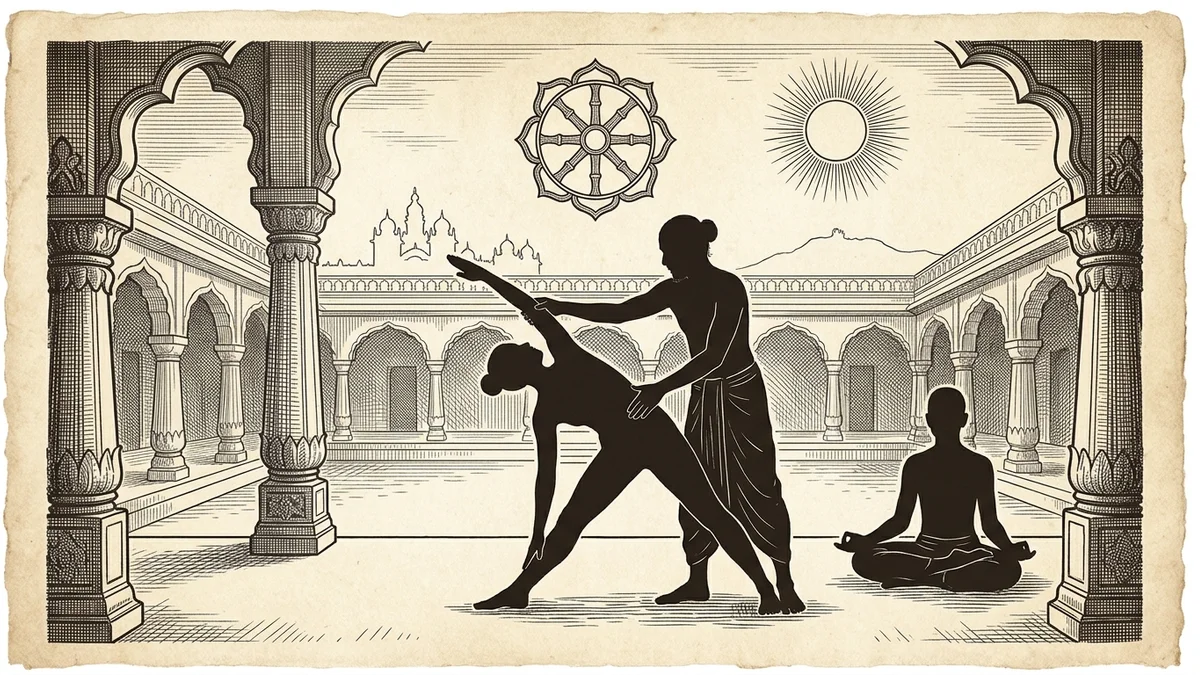
Best 200-Hour Yoga Teacher Training in Mysore
Discover how to choose the best Yoga Alliance accredited 200-Hour Ashtanga & Hatha Yoga Teacher Training in Mysore. Compare ashrams, costs, and curriculum.
 Yoga Psychology
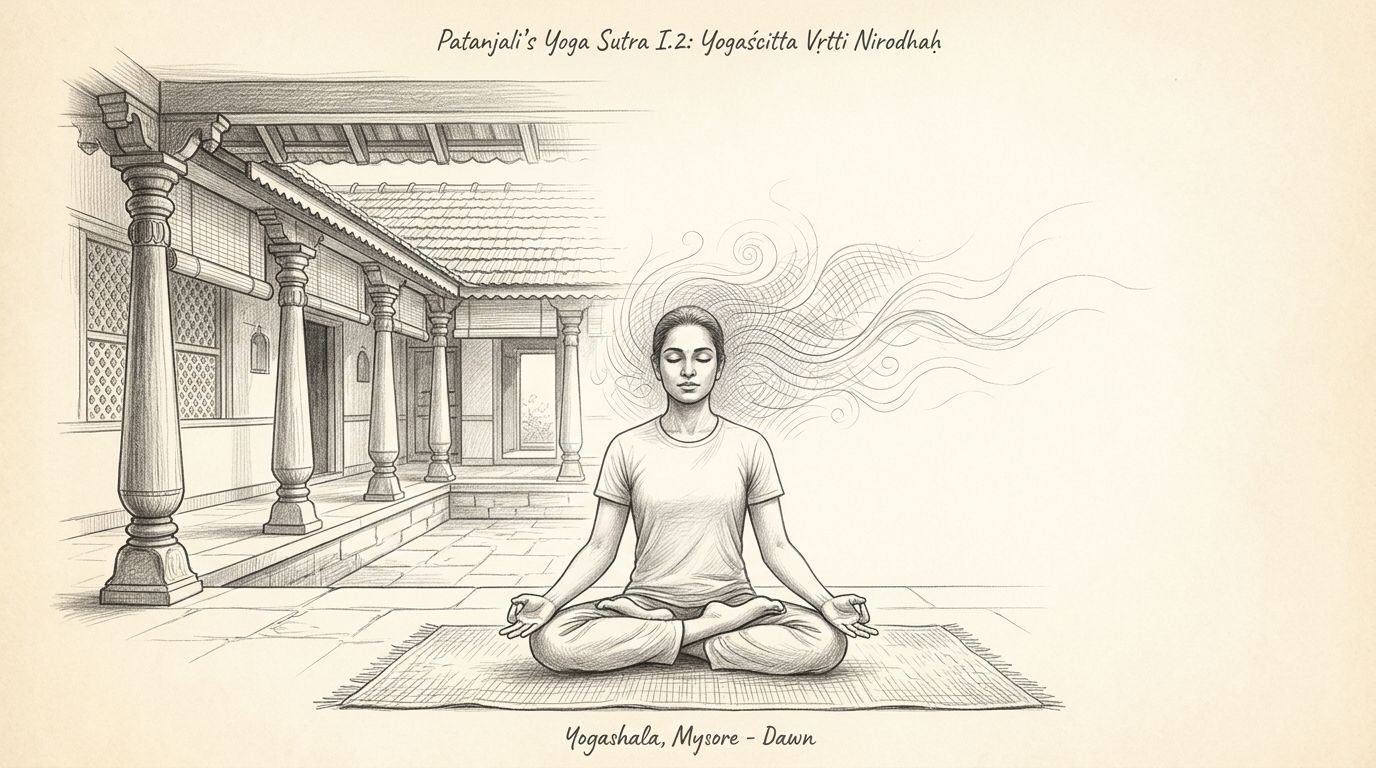
The Secrets of Overthinking and How to Stop Overthinking Through Yogic Understanding
Discover how classical yoga psychology explains overthinking as Chitta Vritti. Unmask the 10 respectable disguises, use the one decisive filter, and apply the 6-step protocol to quiet mental noise.