7 Dimensions of Padmasana & the Life Lotus

Among all physical postures in the yogic tradition, Padmasana (The Lotus Pose) stands supreme. Represented across thousands of years of Indic iconography, sculptures, and scriptural texts, Padmasana is far more than a hip-opening stretch—it is the quintessential posture for deep meditation (Dhyana) and Kundalini awakening.
Medical studies in hip biomechanics emphasize the importance of external hip rotation to prevent knee strain during seated postures (PubMed). In classical yoga literature (Wikipedia), Padmasana symbolizes spiritual purity, unfolding like a lotus flower above muddy waters.
What is Padmasana (Lotus Pose) in Yoga?
"Padmasana is the supreme throne for meditation, destroying all physical and energetic disorders." — Hatha Yoga Pradipika (1.47)
Padmasana (Lotus Pose) is the classical seated yoga posture where each foot rests cross-legged on the opposite thigh with soles turned upward. It locks the pelvic floor, stabilizes the spine, and directs vital life force (Prana) into the central channel (Sushumna Nadi), creating an immovable physiological foundation for deep meditation and self-inquiry.
1. The 7 Dimensions of the Life Lotus
| Dimension | Aspect of Practice | Physical & Subtle Significance |
|---|---|---|
| 1. Somatic Alignment | Pelvic & Spinal Neutrality | Stabilizes the sacrum, neutralizes lumbar curve, and aligns vertebrae |
| 2. Neuro-Vascular Lock | Femoral Pressure | Directs blood flow from lower limbs into pelvic organs & spinal cord |
| 3. Pranic Channeling | Sushumna Nadi Activation | Engages Mula Bandha naturally, drawing energy upward through the spine |
| 4. Mental Stability | Sthira Sukham | Eliminates postural swaying, settling brainwave activity into Alpha states |
| 5. Symbolism of Purity | The Unspoiled Lotus | Represents rising above worldly entanglements (Samsara) unblemished |
| 6. Scriptural Authority | Hatha Yoga Pradipika | Hailed as the destroyer of all diseases (Vyadhi-Vinashanam) |
| 7. Vedantic Seat | Atma-Vichara Gateway | The supreme vessel for hearing, reflecting, and meditating on non-dual truth |
2. Anatomical Biomechanics: Protecting the Knee Joint
The most common mistake practitioners make when attempting Padmasana is forcing the knee joint to twist. The knee is a hinge joint designed primarily for flexion and extension—it has minimal rotational capability.
- Rule of Hip Rotation: All lateral rotation must originate from the ball-and-socket joint of the hip, not the knee.
- Prerequisite Mobility: Master poses like Baddha Konasana (Butterfly) and Janu Sirsasana to build external hip rotation before attempting full Lotus.
- Ankle Stabilization: Keep the ankle joint neutral to prevent lateral ankle strain (sickling).
3. Practical Steps to Build Toward Padmasana Safely
- Step 1: Half Lotus (Ardha Padmasana): Place one foot on the opposite thigh while keeping the other foot beneath the knee.
- Step 2: Use Props: Sit on a folded blanket to elevate hips above knee level, reducing hip flexor tension.
- Step 3: Breathe Slowly: Hold the preparation pose for 10-15 deep Ujjayi breaths, relaxing the adductors.
Frequently Asked Questions (FAQ)
Can everyone achieve Padmasana?
Bone anatomy varies; individual femoral neck angles and acetabular depth dictate hip rotation capacity. If skeletal structure restricts full Lotus, Ardha Padmasana or Siddhasana provides identical meditative benefits.
Why is Padmasana preferred for Pranayama?
Padmasana locks the lower limbs, preventing body swaying and naturally engaging Mula Bandha, which keeps the spine effortlessly erect during extended breath retention (Kumbhaka).
Master Traditional Postures at Samyut Yoga Mysore
Learn safe, biomechanically sound posture progression under Yogacharya Dr. Aravind Prasad.
Related Readings & Further Studies
Yogacharya Aravind Prasad
E-RYT 500 · YACEP · Founder, Samyut Yoga
Gurukulam-trained in Yoga, Veda and Vedanta with 15+ years of teaching experience. Founder of Samyut Yoga, Mysore.
Join Samyutam — The Spiritual Sadhana Sangha
Move beyond posture. Study Vedanta philosophy, master Sanskrit, and practice traditional pranayama and Tantric meditation under authentic lineage guidance.
Apply to Join the SanghaRelated Articles & Insights
 Practice of Raja Yoga
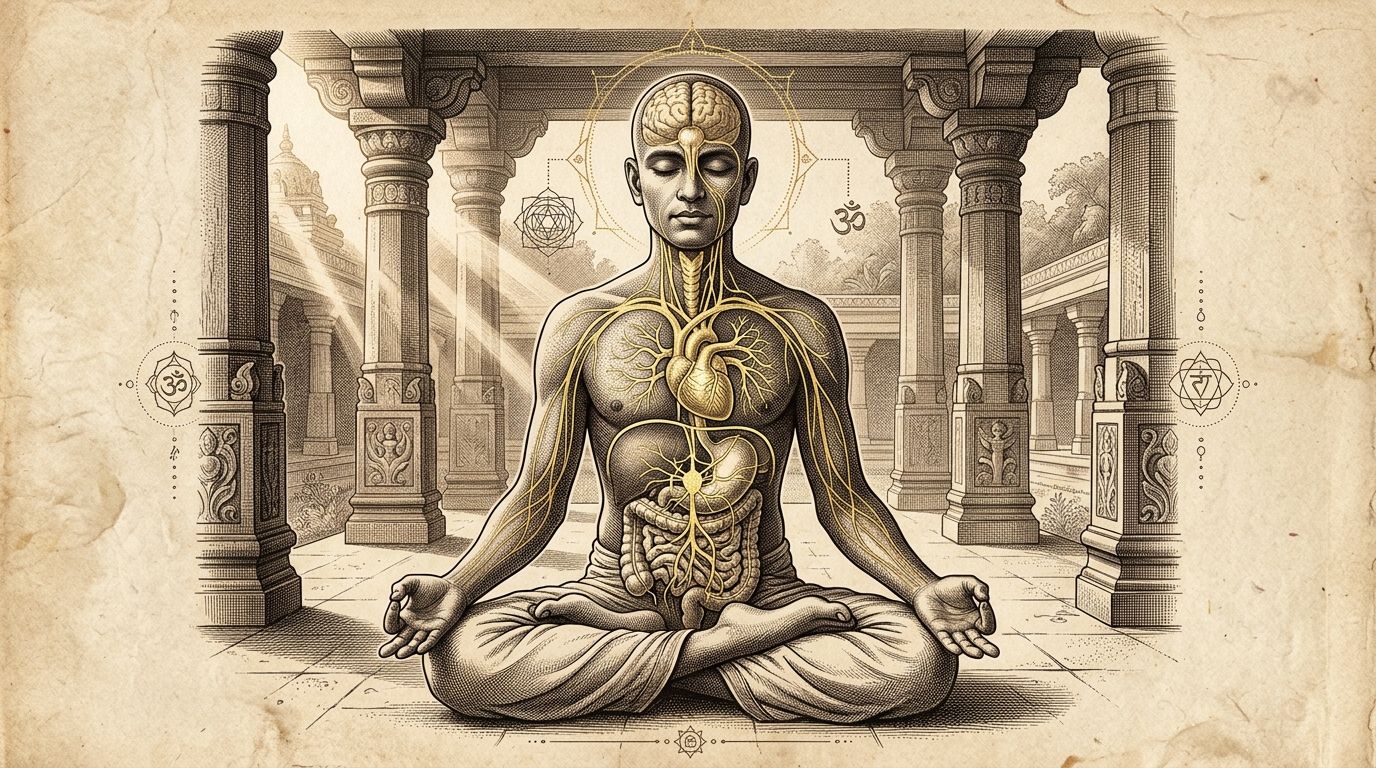
How Yoga Breathing Calms Your Nervous System: A Simple Guide to the Vagus Nerve and Ancient Pranayama
Discover how simple yoga breathing stimulates the vagus nerve, releases nitric oxide, and restores Heart Rate Variability (HRV) to shift your body out of chronic stress into deep calm.
 Practice of Raja Yoga
The Ultimate Daily Morning Yoga Sadhana Routine: Classical Dinacharya, Pranayama & Asana Sequence
Discover how to establish a transformative daily morning yoga sadhana routine at home. Learn classical Brahma Muhurta timing, Dinacharya cleansing, Pranayama, Asana, and meditation.
 Practice of Raja Yoga
The Traditional Mysore Style Ashtanga Yoga Sequence: Origins, Philosophy & Complete Practice Guide
Learn the origins, structure, and philosophy of the traditional Mysore Ashtanga Yoga sequence. Explore the Tristhana method and how to practice self-paced Vinyasa.