How Does Vedanta Philosophy Complement Physical Yoga Practice?
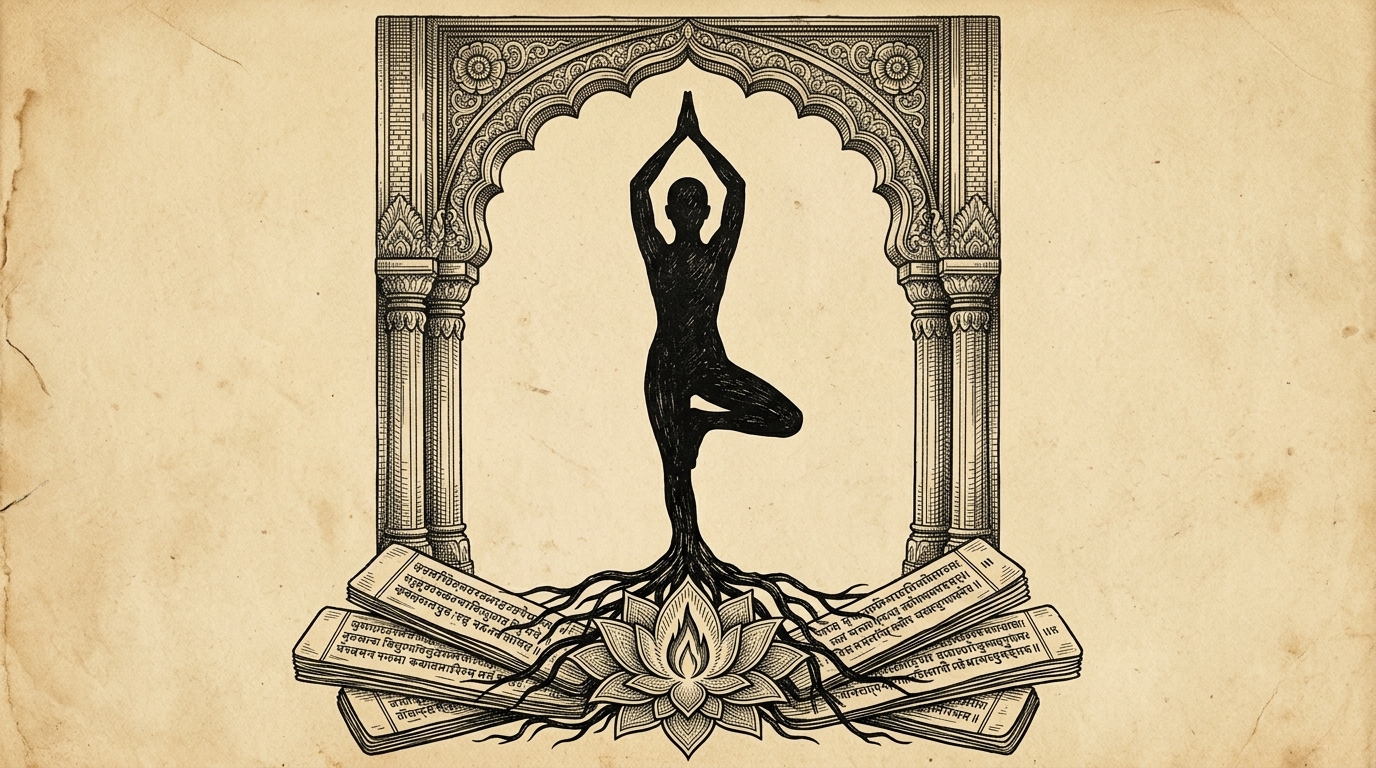
In the modern wellness industry, yoga is frequently marketed as a tool for physical flexibility, stress relief, and athletic fitness. While it excels at all three, these benefits are merely the outer doorway. According to classical Indic traditions, physical postures (Asanas) were never intended as the ultimate goal—they were designed as preparatory steps to steady the body and calm the nervous system for deep spiritual inquiry (Atma-Vichara).
Advaita Vedanta philosophy complements physical yoga practice by providing the non-dual metaphysical framework that transforms physical posture (Asana) from a somatic exercise into a spiritual inquiry (Atma-Vichara). While physical yoga steadies the body and nervous system, Vedanta redirects the quieted mind toward discerning the eternal observer (Drashta) from fleeting physical states.
Modern neuroscientific research confirms that combining somatic movement with contemplative inquiry enhances executive function and parasympathetic regulation (PubMed). In non-dual Advaita Vedanta (Wikipedia), physical practice and intellectual inquiry are integrated into a single unified discipline.
"Yoga is the stilling of mental fluctuations; Vedanta is the realization of the Seer within." — Classical Gurukulam Maxim
---
1. The Historical & Philosophical Synthesis of Yoga and Vedanta
To understand how these two systems work together, we must examine their origins in ancient Indian thought. Yoga and Vedanta are two of the six classical Darshanas (orthodox schools of Indic philosophy).
- Raja / Hatha Yoga (Patanjali & Svatmarama): Focuses on practical methodology (Sadhana)—purifying the energetic channels (Nadis), balancing vital currents (Prana), and stilling the mental fluctuations (Citta-Vritti-Nirodha).
- Advaita Vedanta (Vyasa, Sankara, & Upanishads): Focuses on ultimate knowledge (Jnana)—inquiring into the nature of reality (Tattva-Vichara) and recognizing that individual consciousness (Jiva) is non-different from supreme awareness (Brahman).
In ancient Gurukulam education systems like Samyut Yoga Mysore, these two systems were never taught in isolation. Physical posture cleans the mirror of the mind; Vedanta allows you to see your true reflection in that clean mirror.
When a practitioner rolls out their mat, the physical body is often laden with physical tension, systemic inflammation, and mental restlessness. If one attempts to sit in silent Vedantic meditation in this agitated state, the mind becomes overwhelmed by bodily discomfort and racing thoughts. Physical posture (Asana) and breath control (Pranayama) systematically release muscular armoring and balance the autonomic nervous system. Once the body is painless and steady (Sthira Sukham), the mind becomes quiet enough to absorb deep Vedantic truths.
---
2. Structured Comparison: Physical Yoga vs. Vedantic Self-Inquiry
| Aspect | Physical Hatha & Ashtanga Yoga | Advaita Vedantic Self-Inquiry (Vichara) |
| :--- | :--- | :--- |
| Primary Focus | Postural alignment, breath control (Pranayama), and nervous system regulation | Discriminating the eternal Seer (Drashta) from observed phenomena (Drshyam) |
| Primary Tool | Asana, Mudra, Bandha, and Kriya practices | Sravana (Hearing truth), Manana (Reflection), Nididhyasana (Meditation) |
| Target Layer | Physical body (Annamaya) & Energetic sheath (Pranamaya Kosha) | Intellectual sheath (Vijnanamaya) & Bliss sheath (Anandamaya Kosha) |
| Obstacle Addressed | Physical stiffness, energetic blockages (Granthis), and restlessness | Ignorance of one's true nature (Avidya) and misidentification with body |
| Ultimate Outcome | Sthira Sukham (Steady comfort) and initial mental concentration (Dharana) | Moksha (Liberation) and realization of non-dual oneness (Advaita) |
| Lineage Authority | Patanjali, Svatmarama, Krishnamacharya | Vyasa, Adi Shankaracharya, Upanishads |
---
3. The Five Koshas: Bridging Body and Spirit
In the Taittiriya Upanishad, human existence is described through five interpenetrating sheaths or dimensions known as the Panchakosha:
- Annamaya Kosha (Physical Sheath): Cultivated through physical postures (Asanas), alignment, and Satvik nutrition.
- Pranamaya Kosha (Vital Energy Sheath): Regulated through Pranayama (breath control) and Shatkarmas (cleansing practices).
- Manomaya Kosha (Mental Sheath): Calmed through Dharana (concentration) and Pratyahara (sensory withdrawal).
- Vijnanamaya Kosha (Wisdom/Intellectual Sheath): Awakened through Vedantic self-inquiry (Vichara) and scriptural reflection.
- Anandamaya Kosha (Bliss Sheath): Experienced in deep meditation (Samadhi) when all sheaths align with pure awareness.
Physical yoga cleanses the outer sheaths (Annamaya and Pranamaya). Once the body is painless and the breath is smooth, the practitioner moves into Vijnanamaya Kosha where Vedanta shines light on the nature of the Self.
---
4. Neurobiology & Somatic Physiology of Integrated Practice
Modern clinical neurophysiology shows that physical postures stimulate proprioceptors and mechanoreceptors, sending steady sensory input through the spinal cord to the brainstem. This vagal nerve activation lowers cortisol levels and increases heart rate variability (HRV) (PubMed).
When the autonomic nervous system enters a parasympathetic state, the prefrontal cortex becomes highly receptive to complex cognitive processing. This is the physiological window where Vedantic inquiry (Atma-Vichara) is most effective. Trying to contemplate non-dual philosophy while your body is tight and your nervous system is in fight-or-flight mode is extremely difficult; physical yoga prepares the neural landscape for high Vedantic wisdom.
Furthermore, studies in neuroplasticity demonstrate that combining somatic movement with philosophical reflection alters neural connectivity in the default mode network (DMN). This reduces rumination, self-referential fear, and chronic stress, allowing the practitioner to embody emotional resilience in daily life.
---
5. Practical Steps to Integrate Vedanta into Daily Asana Practice
Here is how you can transform your physical practice into a Vedantic sadhana:
- Step 1: Cultivate Sakshi Bhav (Witness Attitude): As you hold a challenging posture like Padmasana or Virabhadrasana, observe the physical sensation without judgment. Remind yourself: "I am the witness of this sensation, not the sensation itself."
- Step 2: Apply Neti Neti (Not This, Not That): When thoughts of fatigue or distraction arise, mentally state: "Neti, Neti—I am not this fleeting thought. I am the conscious awareness perceiving it."
- Step 3: Conclude with Scriptural Contemplation (*Nididhyasana*): After Savasana, spend 10 minutes sitting quietly in contemplation of a Mahavakya (great Vedantic truth) such as "Aham Brahmasmi" (I am Supreme Awareness).
---
Frequently Asked Questions (FAQ)
Can I practice Vedanta without doing physical yoga postures?
While theoretically possible, classical tradition strongly advises purifying the body and nervous system first. If physical pain or mental restlessness is present, deep philosophical reflection often turns into intellectual speculation rather than direct realization.
What is the difference between Yoga Sutras and Advaita Vedanta?
Patanjali's Yoga Sutras focus primarily on the dualistic (*Sankhya*) framework of isolating the Seer (*Purusha*) from nature (*Prakriti*). Advaita Vedanta takes the final step, revealing that Purusha and Prakriti are ultimately manifestations of the single, non-dual Reality (*Brahman*).
How does this approach benefit modern yoga teachers?
Yoga teachers who integrate Vedanta offer far more than physical exercise routines. They guide their students toward emotional resilience, stress reduction, and genuine spiritual depth, setting their teaching apart in the wellness industry.
---
Join Samyutam: The Spiritual Sadhana Sangha
If you want to move beyond superficial posture and connect with the traditional depth of yoga, join Samyutam (The Samyut Sangha).
Under the direct guidance of Yogacharya Dr. Aravind Prasad, our community offers an authentic space for traditional scriptural study and spiritual practice:
- Philosophy of Vedanta: Deep study of Patanjali's Yoga Sutras, Bhagavad Gita, and Upanishads to resolve intellectual inquiry.
- Psychology of Tantra: Cultivating mental purification and advanced concentration using classical tantric technologies.
- Practice of Raja Yoga: Aligning physical sequencing, pranayama, and breath retention to transition your practice into inner absorption.
Ready to walk inside the temple? Apply to Join Samyutam Sangha to connect with a global family of dedicated seekers and teachers.
---
Related Readings
- What Are the Five Pillars of Vedanta Yoga?
- 5 Reasons to Integrate Vedanta and Yoga
- Ashtanga vs. Vinyasa vs. Hatha: Which 200-Hour YTT Should I Choose?
- Explore Samyut Yoga 200-Hour Teacher Training Courses
6. Scriptural Analysis: Taittiriya Upanishad and the Five Sheaths
The Taittiriya Upanishad provides the foundational blueprint for integrating physical posture practice with Vedantic self-inquiry through its systematic mapping of the Panchakosha (Five Sheaths of Human Existence):
- Annamaya Kosha (The Physical Sheath): Formed from food and physical elements. Modern Hatha and Ashtanga posture practice purifies this sheath, releasing muscular tension, enhancing joint mobility, and establishing alignment.
- Pranamaya Kosha (The Vital Energy Sheath): Composed of vital breath (Prana) and 72,000 energetic channels (Nadis). Regulated through Ujjayi Pranayama, Bandhas, and Shatkarmas.
- Manomaya Kosha (The Mental Sheath): Composed of thoughts, emotions, and sensory perceptions. Calmed through concentration (Dharana) and sensory withdrawal (Pratyahara).
- Vijnanamaya Kosha (The Wisdom/Intellectual Sheath): Composed of higher intellect (Buddhi) and self-inquiry (Vichara). This is where Vedantic discrimination (Viveka) operates to discern the Seer from the Seen.
- Anandamaya Kosha (The Bliss Sheath): The subtle sheath of innate joy experienced in deep absorption (Samadhi) when all outer sheaths are purified.
Physical yoga cleanses the outer two sheaths (Annamaya and Pranamaya). Without Vedantic self-inquiry in Vijnanamaya Kosha, the practitioner remains trapped in physical body-identification. When physical posture is united with Vedanta, all five sheaths align, leading to direct realization of the non-dual Self (Atman).
---
7. Classical Gurukulam Transmission at Samyut Yoga Mysore
In ancient India, yoga was never taught as a commercial fitness class in a studio. It was transmitted within a Gurukulam—a sacred residential sanctuary where students lived alongside their teacher (Guru), immersing themselves in posture practice, breathwork, scriptural study, and Ayurvedic living.
At Samyut Yoga Mysore, under the direction of Yogacharya Dr. Aravind Prasad, this classical Gurukulam model is preserved for modern seekers:
- Authentic Lineage: Direct transmission of Ashtanga Vinyasa, Classical Hatha, and Advaita Vedanta without modern dilution.
- Small Batch Philosophy: Classes capped at 15 students to ensure individual hands-on adjustments and personalized scriptural guidance.
- Holistic Campus Environment: Located at Shivasadana Mysore, offering private rooms, medical-grade Ayurvedic nutrition, and daily fire rituals (Havan).
6. Historical Evolution of Yoga and Vedanta Synthesis
To fully appreciate how Vedanta philosophy complements physical posture practice, we must trace the historical development of Indian philosophical thought across major epochs:
- The Vedic Period (c. 1500–800 BCE): The original Samhitas and Brahmanas focused primarily on external fire rituals (Yajnas) and mantras to harmonize human life with cosmic order (Rita).
- The Upanishadic Era (c. 800–500 BCE): The secret teachings (Upanishads) shifted focus from external rituals to internal self-inquiry (Atma-Vichara), introducing non-dual Vedantic concepts like Brahman, Atman, and Maya.
- The Classical Era (c. 400 CE): Patanjali systematized Raja Yoga into the eight-limbed path (Ashtanga), providing practical psychological tools to still the mind (Citta-Vritti-Nirodha).
- The Medieval Hatha Era (c. 1000–1500 CE): Texts like the Hatha Yoga Pradipika and Gheranda Samhita expanded physical posture (Asana), breath control (Pranayama), and locks (Bandhas) to purify physical and energetic tissues (Nadis).
- The Modern Synthesis at Samyut Yoga Mysore: Under Yogacharya Dr. Aravind Prasad, physical Hatha and Ashtanga Vinyasa practices are reunited with non-dual Advaita Vedanta, completing the evolutionary arc from somatic preparation to ultimate liberation (Moksha).
---
7. Comparative Matrix: Somatic Asana Practice vs. Vedantic Jnana Sadhana
| Dimension | Somatic Physical Asana Practice | Vedantic Jnana Sadhana (Vichara) |
| :--- | :--- | :--- |
| Primary Level of Operation | Physical Sheath (Annamaya) & Energetic Sheath (Pranamaya Kosha) | Intellectual Sheath (Vijnanamaya) & Bliss Sheath (Anandamaya Kosha) |
| Primary Physiological Mechanism | Proprioceptive sensory stimulation, vagal nerve activation & spinal alignment | Prefrontal cortical neuroplasticity & Default Mode Network (DMN) regulation |
| Primary Obstacle Addressed | Musculoskeletal stiffness, energetic blockages (Granthis) & physical pain | Spiritual ignorance (Avidya) & false identification with temporary body |
| Primary Daily Method | Asana holds, Ujjayi Pranayama, Mula Bandha, Shatkarmas | Sravana (Hearing scripture), Manana (Reflection), Nididhyasana (Meditation) |
| Target Outcome | Sthira Sukham (Steady comfort) & initial concentration (Dharana) | Moksha (Liberation) & direct realization of non-dual oneness (Advaita) |
| Scriptural Authority | Patanjali Yoga Sutras, Hatha Yoga Pradipika, Gheranda Samhita | Chandogya Upanishad, Bhagavad Gita, Adi Shankaracharya's Vivekacudamani |
---
8. Detailed Protocol for Vedantic Asana Practice
Here is a comprehensive 4-stage daily practice protocol to transform physical posture into a Vedantic sadhana:
- Stage 1: Pre-Practice Intention (*Sankalpa*): Before unrolling your yoga mat, sit quietly in Padmasana or Sukhasana. Remind yourself: "I am entering this practice not to perform physical exercises, but to steady the vessel for self-realization."
- Stage 2: Sakshi Bhav in Asana Holds: When holding standing or seated postures (such as Trikonasana, Paschimottanasana, or Virabhadrasana), direct 50% of your attention to observing physical sensations without judgment. Repeat mentally: "I am the eternal Seer (Drashta) of this sensation, not the sensation itself."
- Stage 3: Neti Neti during Fatigue: When physical fatigue or mental resistance arises during intense posture holds, apply the classical Vedantic formula Neti, Neti ("Not this, not that"). State internally: "I am not this temporary fatigue; I am the unmoving awareness perceiving it."
- Stage 4: Post-Savasana Contemplation (*Nididhyasana*): After completing final relaxation (Savasana), sit quietly for 10–15 minutes. Contemplate a Mahavakya (great Vedantic statement) such as "Aham Brahmasmi" (I am Supreme Awareness) or "Tat Tvam Asi" (That Thou Art).
15. The Eternal Vision of Samyut Yoga Mysore
At Samyut Yoga Mysore, under Yogacharya Dr. Aravind Prasad, our vision is to preserve the authentic, unadulterated purity of traditional Indic wisdom while integrating modern biomechanical science. Whether studying Ashtanga Vinyasa, Classical Hatha, Tantra Psychology, or Advaita Vedanta, students are supported in realizing their highest spiritual potential (Moksha).
To experience this transformation firsthand, consider joining our upcoming 200-Hour Residential Teacher Training in Mysore, India:
- Authentic Gurukulam Immersion: Small batch sizes capped at 15 students for individualized mentoring.
- Comprehensive Curriculum: 200 hours of Yoga Alliance accredited study covering Asana alignment, Ujjayi Pranayama, Bandhas, Patanjali Sutras, Advaita Vedanta, and hands-on adjustment labs.
- Private Room Accommodation & Satvik Meals: Reside at Shivasadana Mysore with 3 freshly prepared Ayurvedic meals daily.
Begin your spiritual journey today: Apply for 200-Hour YTT Courses or Join Samyutam Sangha.
Yogacharya Aravind Prasad
E-RYT 500 · YACEP · Founder, Samyut Yoga
Gurukulam-trained in Yoga, Veda and Vedanta with 15+ years of teaching experience. Founder of Samyut Yoga, Mysore.
Join Samyutam — The Spiritual Sadhana Sangha
Move beyond posture. Study Vedanta philosophy, master Sanskrit, and practice traditional pranayama and Tantric meditation under authentic lineage guidance.
Apply to Join the Sangha