The Mystical Psychology of Tantra Yoga: Unveiling the Hidden Depths of the Mind

Long before modern psychoanalysis, Carl Jung, or neuroscience, classical Tantra Yoga developed a complete map of the human psyche. Tantric psychology explores the subconscious reservoir (Chitta), the energetic centers (Chakras), and the latent evolutionary potential (Kundalini) hidden within human neurology.
Neurobiological research confirms that meditation techniques targeting the subtle body regulate the autonomic nervous system and enhance emotional resilience (PubMed). In Indic psychology (Wikipedia), the psyche is analyzed through the interaction of Shiva (Consciousness) and Shakti (Energy).
What is the Mystical Psychology of Tantra Yoga?
"Yatha Pinde Tatha Brahmande: As is the microcosm of the human body, so is the macrocosm of the universe." — Siddha Siddhanta Paddhati
The mystical psychology of Tantra Yoga is a holistic science of mind mapping that integrates conscious awareness, subconscious impressions (Samskaras), and energy centers (Chakras). It views mental disturbances not as defects, but as blocked Prana, providing exact tools (Mantra, Yantra, Nyasa) to unblock energy pathways and awaken latent spiritual potential (Kundalini).
1. The 7 Chakras & Psychological Archetypes Matrix
| Chakra Name | Element | Psychological Archetype | Positive Expression when Awakened |
|---|---|---|---|
| 1. Muladhara | Earth | Grounding & Survival | Unshakable trust, physical stability & security |
| 2. Svadhisthana | Water | Creativity & Emotion | Fluid adaptability, healthy relationships & artistic flow |
| 3. Manipura | Fire | Personal Will & Action | Courage, strong digestive Agni & purposeful action |
| 4. Anahata | Air | Compassion & Love | Unconditional love, forgiveness & heart coherence |
| 5. Vishuddha | Ether | Truth & Expression | Authentic communication, vocal power & clarity |
| 6. Ajna | Mind | Intuition & Insight | Inner vision, high concentration (Dharana) & wisdom |
| 7. Sahasrara | Consciousness | Non-Dual Unity | Transcendental bliss (Ananda) & spiritual oneness |
Frequently Asked Questions (FAQ)
How does Tantric psychology treat anxiety?
Tantric psychology traces anxiety to erratic flow in Pingala Nadi. Through abdominal breathing, Bhramari Pranayama, and Muladhara grounding, it stabilizes Prana and activates parasympathetic nervous regulation.
Explore Tantric Psychology at Samyut Yoga
- What is Tantra Yoga? Inner Science of Self-Transformation
- Explore Teacher Training Programs
- Apply to Join Samyutam Sangha
Deepen your practice with our authentic 200-Hour Yoga Teacher Training in Mysore or connect with our international community at Samyut Sangha.
Yogacharya Aravind Prasad
E-RYT 500 · YACEP · Founder, Samyut Yoga
Gurukulam-trained in Yoga, Veda and Vedanta with 15+ years of teaching experience. Founder of Samyut Yoga, Mysore.
Join Samyutam — The Spiritual Sadhana Sangha
Move beyond posture. Study Vedanta philosophy, master Sanskrit, and practice traditional pranayama and Tantric meditation under authentic lineage guidance.
Apply to Join the SanghaRelated Articles & Insights
 Psychology of Tantra Yoga
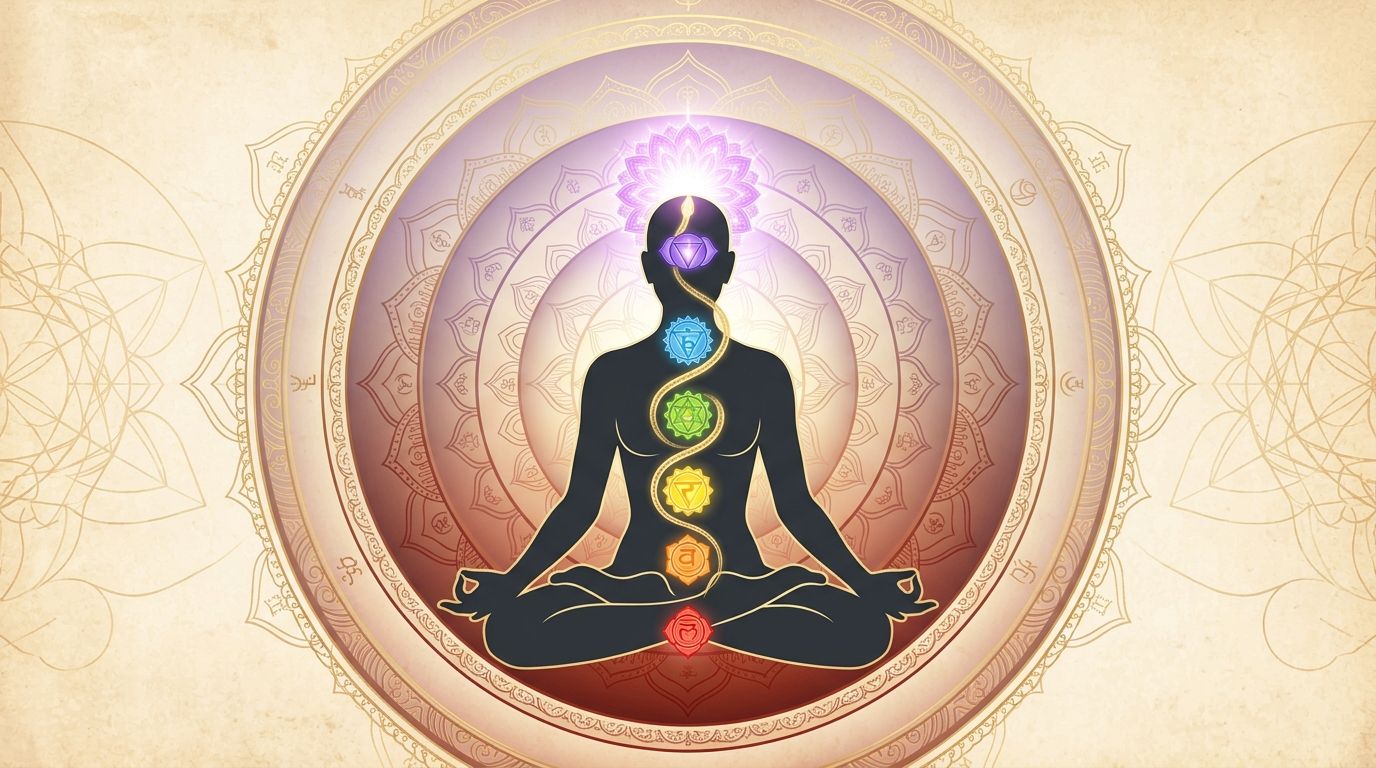
Decoding the 7 Stages of Consciousness: A Tantra Yoga Perspective
Discover the differences between the subconscious mind (Chitta) and the superconscious mind (Ritambhara), and explore Patanjali's seven stages of consciousness.
 Psychology of Tantra Yoga
How to Overcome Limited Identities Through Tantra Yoga
Learn how classical Tantra Yoga psychology helps deconstruct limited socio-cultural identities and conditionings to access higher dimensions of consciousness.
 Psychology of Tantra Yoga
What is Tantra Yoga? The Inner Science of Self-Transformation
Explore the authentic meaning of Tantra Yoga. Discover the difference between Left-Hand (Vamachara) and Right-Hand (Dakshinachara) paths, and learn how to master your instincts.